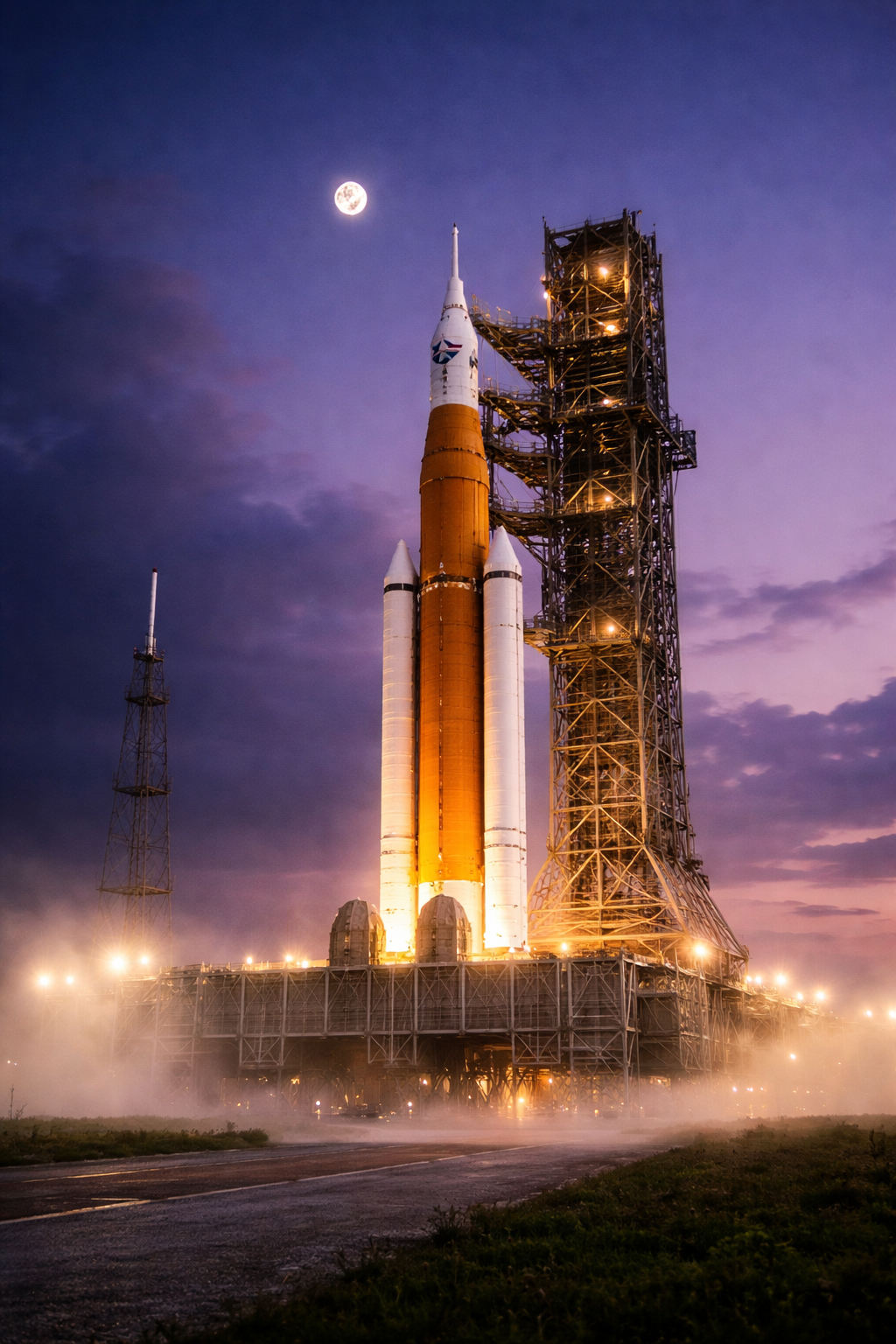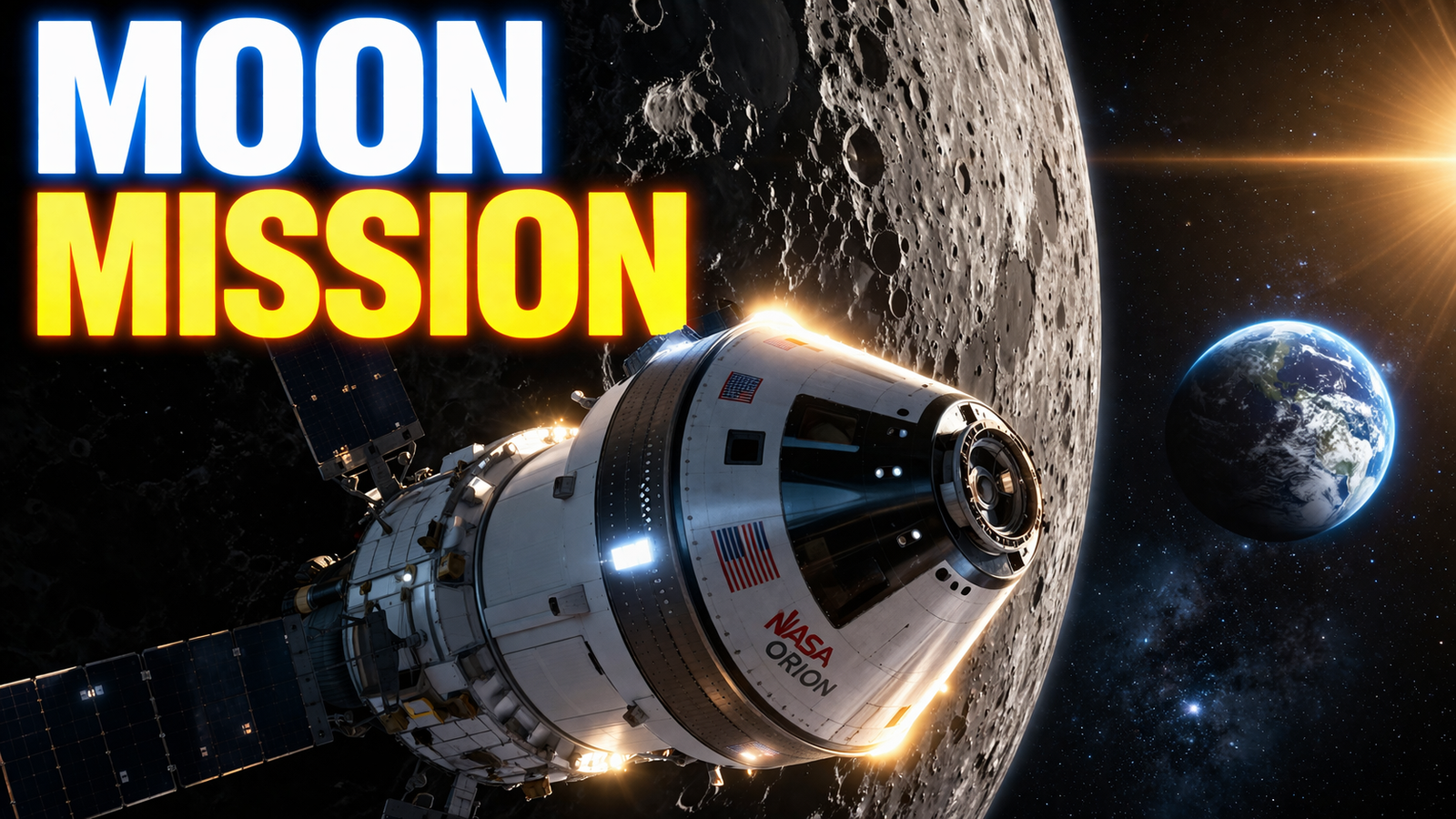
NASA’s Artemis II mission achieved a groundbreaking milestone as its four-member crew successfully completed a record-breaking flyby of the Moon’s far side, venturing farther from Earth than any humans in history. The astronauts are now on their return journey to Earth following the daring orbital maneuver that captivated global audiences and marked a significant step toward future lunar landings.
According to officials at NASA, the crew, commanded by Reid Wiseman, passed behind the Moon, losing contact with Earth for approximately 40 minutes during the critical phase. During this period, they captured unprecedented views and conducted scientific observations, including sightings described by the team as “sights that no human has ever seen.” The mission also coincided with a solar eclipse observation opportunity, adding to its historic value.
Preliminary data from mission control indicates the spacecraft traveled a greater distance from Earth than the Apollo missions, pushing the boundaries of human space exploration. The crew named a lunar crater after Wiseman’s late wife, who passed away from cancer in 2020, in an emotional tribute shared during communications. As the capsule prepares for re-entry, teams are monitoring systems closely for a safe splashdown expected in the coming days.
This achievement comes at a time of heightened global attention on space endeavors, providing a moment of scientific inspiration amid ongoing international tensions. The Artemis program aims to return humans to the lunar surface, with Artemis III planned for a crewed landing near the Moon’s south pole. Early reports suggest the flyby has yielded valuable data on radiation exposure, spacecraft performance in deep space, and the far side’s geological features, which are less studied than the near side visible from Earth.
The mission launched earlier this year with astronauts Victor Glover, Christina Koch, and Jeremy Hansen joining Wiseman. Throughout the journey, the crew has conducted live broadcasts, sharing insights into life aboard the Orion spacecraft and the psychological aspects of long-duration spaceflight. NASA engineers have praised the flawless execution of the trajectory adjustments required for the lunar flyby.
Experts in space policy note that Artemis II serves as a critical test flight for the Orion capsule and the Space Launch System rocket technology, paving the way for sustainable lunar presence and eventual Mars missions. Based on early telemetry, the spacecraft performed within expected parameters, with minor adjustments made to optimize the return path.
In parallel with the space milestone, attention has also turned to the broader implications for international collaboration in space. While the current mission is a NASA-led effort with international partners, it underscores the potential for peaceful scientific cooperation even as geopolitical challenges persist elsewhere.
The crew’s safe return will be followed by extensive debriefings and analysis of collected samples and data. NASA has scheduled post-mission press conferences to detail findings, with preliminary results expected to inform the design of future Artemis flights.
This success highlights advancements in propulsion, life support systems, and deep-space navigation that have been refined since the Apollo era. Observers from around the world, including partner agencies in Europe, Canada, and Japan, have expressed congratulations, emphasizing the shared human endeavor in exploring beyond our planet.
As the astronauts head home, their journey symbolizes resilience, innovation, and the enduring human drive to push exploration frontiers. The mission has already inspired educational initiatives and public engagement programs aimed at the next generation of scientists and engineers.
Further updates on the re-entry sequence and scientific outcomes are anticipated as the capsule approaches Earth’s atmosphere. The Artemis II flyby not only sets new records but also reinforces NASA’s commitment to a new era of lunar exploration under the Artemis accords.