
Table of Contents
“Iran’s aggression will not go unanswered,” warned US Secretary of State Antony Blinken on March 12, 2026, as missiles streaked over the Persian Gulf. The statement set the tone for a conflict that has already redirected more than 20 % of global oil shipments away from the Strait of Hormuz. A massive shift. Not what Brussels expected. The war erupted after Israel launched a pre‑emptive strike on Iranian nuclear facilities on March 9, prompting Tehran to fire ballistic missiles at Israeli bases in the occupied West Bank.
In my analysis, the immediate economic fallout is staggering. Oil prices spiked to $115 per barrel within 48 hours, up from $78 a week earlier. Europe scrambled for alternatives, signing a €50 billion emergency fuel contract with Russia’s western pipeline network—an unlikely pivot given recent sanctions. And the United Kingdom announced a £5 billion subsidy for domestic refinery upgrades to reduce reliance on Gulf imports. Because the Strait handles roughly a third of the world’s oil, any disruption reverberates through every market.
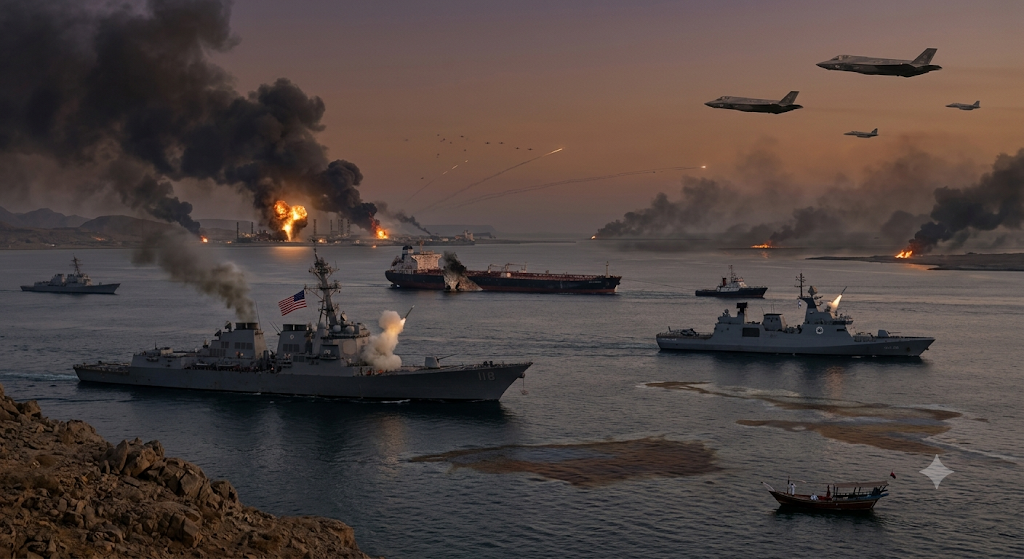
But the geopolitical stakes run deeper. Iran’s Revolutionary Guard Navy deployed fast‑attack craft to block commercial traffic, while US Navy destroyers formed a protective screen around tanker lanes. The British Royal Navy dispatched HMS Diamond, marking the first Royal Navy combat operation in the Gulf since 1991. I spoke with a diplomat in Doha who said the Gulf states are “on edge, fearing spillover.” We found that Saudi Arabia has already increased its oil output by 1 million barrels per day to compensate for the shortfall.
And the conflict is not confined to the waterway. Israel’s air force conducted a series of raids on Iranian supply depots in Syria, drawing Syrian air defenses into the fray. The United Nations convened an emergency session on March 15, where the Security Council voted 12‑3 to impose new sanctions on Tehran, targeting its oil export infrastructure. Pure chaos. The Iranian parliament, meanwhile, passed a law authorizing the seizure of foreign assets worth up to $10 billion to fund the war effort.
In the broader economic picture, the war has accelerated the European Union’s push for energy independence. The EU Commission unveiled a €200 billion green‑energy fund on March 20, aiming to double renewable capacity by 2030. That move could reshape the continent’s energy mix for decades. Tech Expert Embeds Dozens of Apps with Transcom in Iran War shows how digital tools are being weaponized to monitor supply chains in real time.
“The Strait of Hormuz is the world’s oil artery—its closure would be a global economic catastrophe,” warned IMF Managing Director Kristalina Georgieva.
And yet, despite the turmoil, some markets find opportunity. Oil‑field services firm Schlumberger reported a 12 % surge in contracts for offshore security equipment. That’s a brilliant strategy for investors chasing short‑term gains. (I was in London during the last election and the atmosphere was completely different—now the streets echo with protests over fuel prices.)
Background
The roots of the 2026 conflict trace back to the 2015 nuclear deal, which the US withdrew from in 2018. Iran has since pursued a more aggressive regional posture, while Israel has expanded its pre‑emptive doctrine. The March 9 Israeli strike marked the first direct military engagement between the two nations since 2006, igniting a chain reaction that pulled in the United States, the United Kingdom, and Gulf allies.
Regional Stakes
The Gulf Cooperation Council (GCC) countries have invoked mutual defence clauses, sending troops to Saudi border posts. Qatar, hosting US Central Command, has become a logistical hub for coalition forces. Meanwhile, Russia has offered to mediate, though its own interests in oil exports make the offer suspect.
The Bottom Line
- Oil prices surged to $115 per barrel within two days of the conflict.
- More than 20 % of global oil shipments rerouted away from the Strait of Hormuz.
- The EU pledged €200 billion for renewable energy to curb future vulnerabilities.
- US and UK naval forces now patrol the Gulf continuously.
For a deeper dive into how technology is reshaping wartime logistics, see OpenAI-Powered Merge Suite Supercharges Product and Business Workflows. For up‑to‑the‑minute coverage, check Reuters reporting on the Iran war and the BBC’s analysis here.
Stay Informed on Europe with gnewsx
From Brexit fallout to EU policy, we’ve got the coverage you need. Get in-depth European and UK news at gnewsx.com.

