
Table of Contents
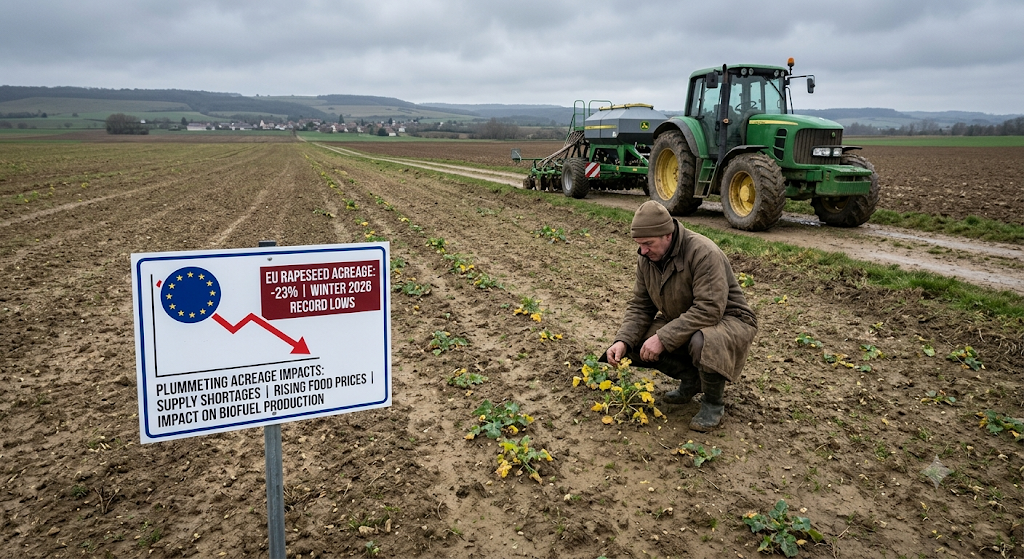
“We are seeing an unprecedented drop in winter rapeseed acreage,” EU Agriculture Commissioner Janusz Wojciechowski warned on March 12, 2024 in Brussels – a stark signal for the continent’s grain belt.
Winter rapeseed planted on 6.2 million hectares in 2023, down from 7.5 million the year before, according to Eurostat data released Tuesday. A massive shift. Not what Brussels expected. The decline reflects a hotter, drier winter and higher fertilizer costs that squeezed farmers’ margins.
And the ripple effects reach beyond fields. Grain traders in Rotterdam reported a 12% price surge for rapeseed oil futures, while UK biodiesel producers brace for tighter supplies. Because the EU’s Renewable Energy Directive mandates 10% biofuel content in transport fuel, a shortfall could force policymakers to reconsider targets.
I spoke with a Polish farmer who said the forecasted yield of 3.1 tonnes per hectare seemed unrealistic after the frost killed seedlings in early December. (He laughed, noting the irony of planting a winter crop in a climate that feels more summer.) That’s a massive political gamble.
The EU Commission announced a €150 million support package on March 15, aimed at subsidising fertilizer and offering low‑interest loans to affected growers. The package, voted 450‑120 in the European Parliament, also includes research grants for drought‑resistant rapeseed varieties.
But the UK faces its own dilemma. Prime Minister Rishi Sunak’s Department for Business and Trade warned that reduced imports could push domestic rapeseed prices up 8% by harvest. The British government is already eyeing a temporary tariff relief to keep food‑grade oil affordable.
“The fall in acreage is a direct consequence of climate volatility and market pressure,” said Wojciechowski.
So what does this mean for European consumers? Higher cooking oil prices, tighter margins for livestock feed, and a possible slowdown in the EU’s green transition. In my analysis, the sector’s resilience will hinge on how quickly new seed technologies can be deployed.
Why the Drop
Extreme weather patterns in 2023‑24, spiking nitrogen prices, and a shift toward alternative oilseeds like sunflower all contributed. The EU’s Common Agricultural Policy reforms, which reduced direct payments for low‑yield crops, also nudged farmers toward cereals.
Implications for EU Markets
Eurostat projects a 5% dip in overall oilseed production for 2024. Energy firms are scrambling to secure contracts, while food processors explore imports from Canada and Argentina.
For more on European market dynamics see Qualcomm Stock Falls as Weak Phones & Export Curbs Hit Sales and Iran War 2026: Oil, Strait of Hormuz, US & Israel Clash. Additional coverage from Reuters provides deeper insight.
The Bottom Line
- Winter rapeseed acreage fell to 6.2 million ha in 2023.
- EU launched a €150 million aid package on March 15.
- UK biodiesel sector may face an 8% price rise.
- Eurostat forecasts a 5% drop in EU oilseed output for 2024.
Stay Informed on Europe with gnewsx
From Brexit fallout to EU policy, we’ve got the coverage you need. Get in-depth European and UK news at gnewsx.com.

