Bangladesh Decides: Historic 2026 Elections Marred by Strategic Shifts and Isolated Violence
DHAKA, Bangladesh — On Thursday, February 12, 2026, millions of Bangladeshis participated in a pivotal general election, the first since the massive 2024 uprising that reshaped the nation’s political landscape. This election is projected to be a defining moment for the country’s democratic resilience as it transitions from an interim administration to a newly elected government. While the streets of Dhaka remained heavily guarded by security forces, the atmosphere across the country was a complex mixture of civic duty and high-tension political rivalry.
A New Era for the Electorate
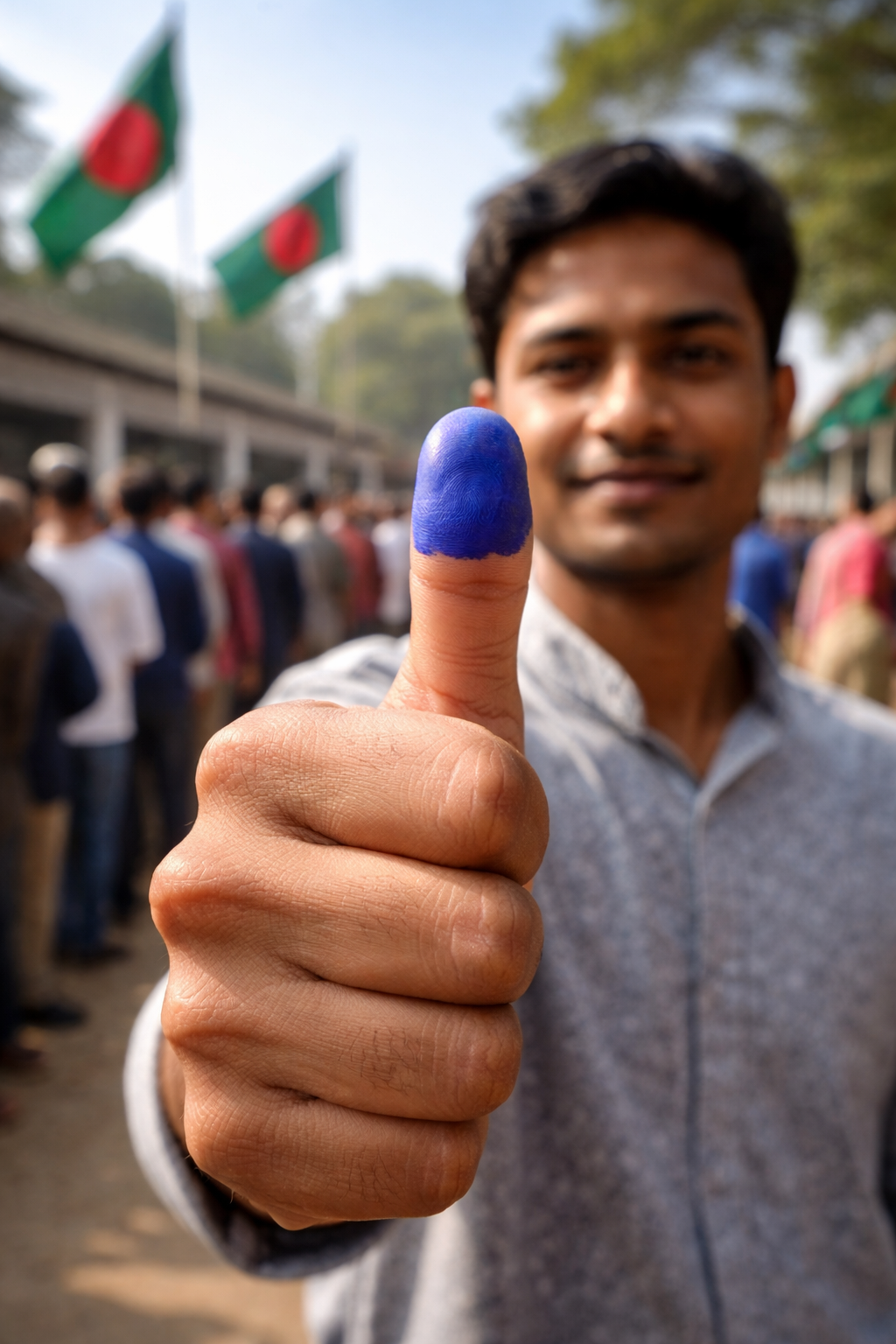
The 2026 polls introduced several logistical and technological changes aimed at increasing transparency. For the first time, the Bangladesh Election Commission implemented a “two-ballot system” alongside the use of “blue thumb marks,” a biometric verification measure designed to curb double-voting. Early reports suggest that Gen Z voters—the engine behind the 2024 movement—turned out in significant numbers, viewing their vote as a protective measure for the reforms achieved over the past two years.
Unlike previous cycles, this election featured a resurgent Bangladesh Nationalist Party (BNP) and a notably active Jamaat-e-Islami, following the absence of Sheikh Hasina’s Awami League from the immediate forefront of the race. Hasina, speaking from an undisclosed location, has reportedly labeled the election “voterless and illegal,” though international observers note that the diversity of candidates on the ballot is significantly higher than in 2018 or 2024.
Reports of Violence and Polling Disruptions
Despite the presence of over 800,000 security personnel, including army and paramilitary forces, the day was not without tragedy. In several districts, including Chittagong and Barisal, isolated incidents of violence were reported. According to early reports from local authorities, a crude bomb was thrown at a polling station in a rural area, leading to a temporary suspension of voting.
Furthermore, a tragic incident occurred at a polling station in Rajshahi where a local BNP leader reportedly died after an altercation with security forces; however, official causes of death are still pending investigation. In a separate and deeply concerning development, two men from the Hindu minority community were killed on the eve of the polls. While the motive remains unconfirmed, these incidents have raised concerns among human rights groups about the safety of religious minorities during periods of political transition.
The Yunus Legacy and the “Birth of a New Nation”
The interim government, led by Nobel Laureate Muhammad Yunus, has described this election as the “true birth of a new nation.” Yunus, who oversaw the constitutional reform process during his tenure, emphasized that the goal was not just a change in leadership but a total overhaul of the “authoritarian machinery” that previously governed the country.
Based on exit polls and early counting trends, the BNP is poised to make a significant comeback, potentially securing a majority that would allow them to form a government without a complex coalition. However, analysts suggest that if no single party achieves a clear mandate, Bangladesh could enter a period of intense horse-trading, with smaller, student-led parties holding the balance of power.
International Scrutiny and Geopolitical Stakes
The eyes of the world are firmly fixed on Dhaka. The United Nations and several European Union observers have been monitoring the process closely. For regional powers like India and China, the outcome is poised to shift the balance of power in South Asia. India, which had close ties with the previous Hasina administration, is projected to engage in cautious diplomacy with whichever faction emerges victorious, focusing on border security and trade continuity.
Conversely, the United States has hailed the conduct of the elections as a “significant step toward democratic consolidation,” though they have called for a thorough and transparent investigation into the reported deaths and electoral irregularities.
Economic Recovery: The Immediate Challenge
Whoever takes the oath of office will inherit an economy that is still in a fragile state of recovery. While the interim government stabilized the foreign exchange reserves, the new administration will be “poised to face” immediate pressure to address high inflation and the soaring cost of living. Business leaders in the garment sector—the backbone of the economy—are calling for political stability above all else to ensure that international orders are not diverted to rival markets like Vietnam or Cambodia.
As the counting continues into the night, the results are currently “not official,” but the trajectory indicates a historic shift. The people of Bangladesh have spoken, and as the “blue thumbs” fade, the work of building a sustainable democracy begins.