


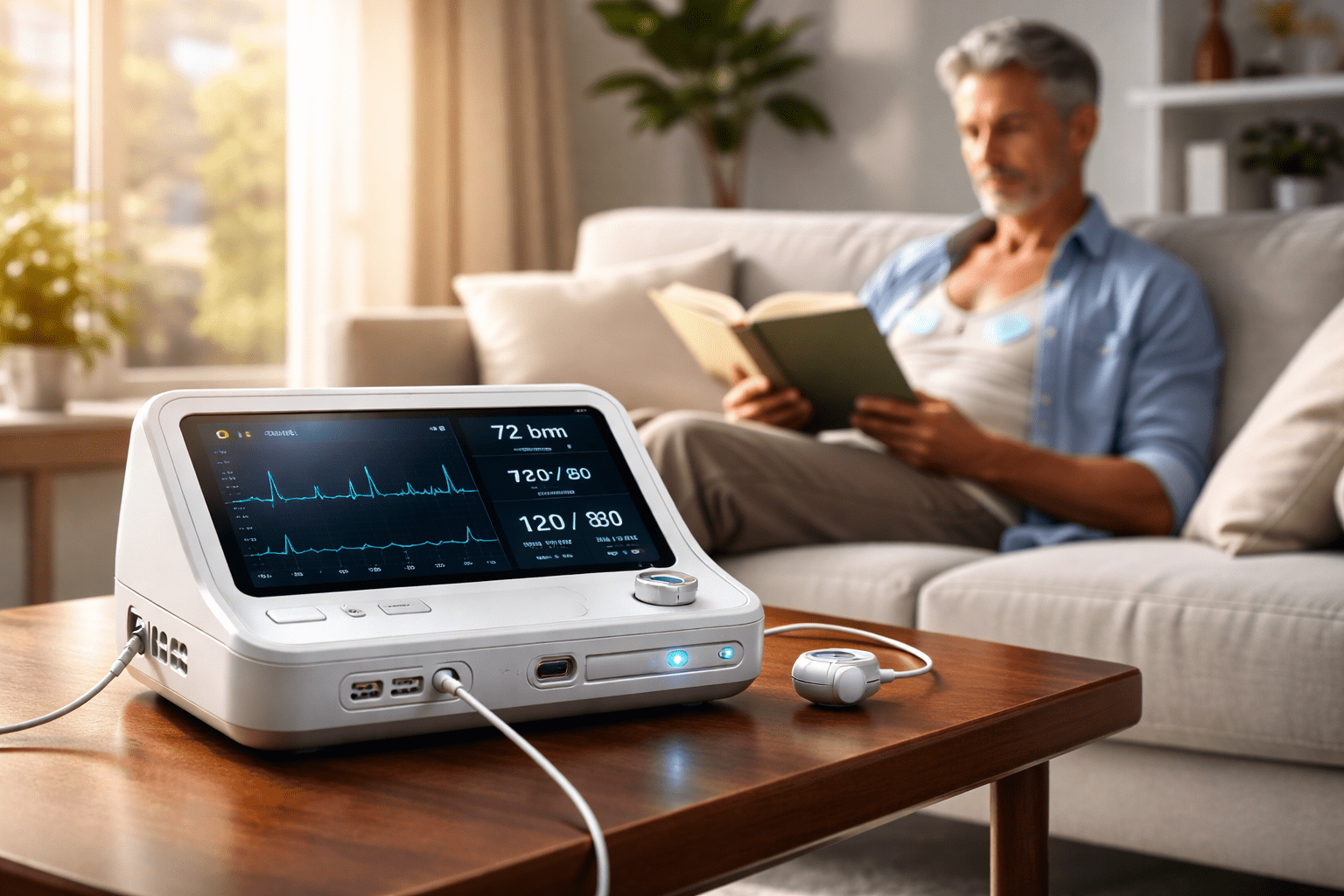
FDA Grants Historic Approval to Optune Pax Device for Advanced Pancreatic Cancer Treatment
SILVER SPRING, USA — In a milestone for oncology and medical technology, the U.S. Food and Drug Administration (FDA) has officially approved Optune Pax, a first-of-its-kind portable device designed to treat adult patients with locally advanced pancreatic cancer. The announcement, made on Thursday, February 12, 2026, marks a paradigm shift in how one of the world’s most aggressive and difficult-to-treat malignancies is managed. Developed by Novocure, the device utilizes Tumor Treating Fields (TTFields) to physically disrupt cancer cell division, offering a non-invasive alternative or supplement to traditional chemotherapy and radiation.
A New Mechanism of Action: Tumor Treating Fields
The core technology behind Optune Pax represents a departure from biochemical interventions. TTFields are low-intensity, alternating electrical fields that are delivered through transducer arrays applied directly to the patient’s abdomen. These fields are poised to interfere with the highly charged proteins involved in mitosis—the process of cell division. By physically disrupting this process, the device is projected to slow or even stop the growth of tumors while leaving healthy, non-dividing cells largely unaffected.
According to clinical trial data submitted to the FDA, patients who utilized the TTFields therapy in conjunction with standard-of-care chemotherapy showed a statistically significant improvement in overall survival rates. While results are based on controlled environments, early real-world evidence suggests that the non-invasive nature of the device allows patients to maintain a higher quality of life during treatment compared to those undergoing intensive systemic therapies alone.
Advancing the “Home as a Health Care Hub” Initiative
The approval of Optune Pax is also being hailed as a victory for the FDA’s “Home as a Health Care Hub” initiative. This program focuses on advancing medical devices that fit seamlessly into a patient’s daily life, moving complex care from the hospital to the living room. Optune Pax is a wearable, battery-powered system, meaning patients can receive treatment while performing routine activities, such as walking, light exercise, or resting at home.
“Pancreatic cancer has long been one of the most challenging frontiers in medicine,” said Dr. Michelle Tarver, Director of the Center for Devices and Radiological Health. “This approval reflects our commitment to patient-centered innovation. By providing a portable, non-invasive option, we are not just fighting the disease; we are supporting the patient’s autonomy and dignity.”
Addressing the Early-Onset Cancer Crisis
The timing of this breakthrough is critical, as recent global health surveys from late 2025 and early 2026 have highlighted a disturbing rise in early-onset cancers. Data from the 2026 Global Medical Trends Survey indicates that 74% of insurers have seen an increase in cancer incidence among populations under the age of 40. Pancreatic cancer, often diagnosed at late stages due to its lack of early symptoms, has been a significant contributor to these rising claim costs and mortality rates.
The introduction of Optune Pax is poised to offer a new line of defense for younger, active patients who require treatments that do not completely incapacitate them. Based on early reports from oncology centers in the UK and Germany, there is already significant interest in integrating TTFields into “precision oncology” frameworks, where treatments are tailored to the genetic and molecular profile of the individual tumor.
Market Dynamics and Global Accessibility
From a business perspective, Novocure is poised to see a significant expansion in its market footprint. While TTFields technology has previously been approved for glioblastoma (a form of brain cancer) and mesothelioma, the pancreatic cancer market represents a much larger patient population. Analysts project that the global medical technology market for oncology could grow by 10.3% in 2026, driven largely by such “boundary-pushing” hardware.
However, challenges remain regarding accessibility and insurance coverage. High-tech wearable devices often carry significant price tags, and multinational employers are already bracing for double-digit increases in benefit costs this year. Novocure has stated it is working with global health authorities to ensure the device is “projected to be available” in European and Asian markets by the third quarter of 2026, pending local regulatory approvals.
The Future of Non-Invasive Oncology
The success of Optune Pax is likely to spur a wave of similar innovations. Researchers are already testing TTFields for other “hard-to-reach” cancers, including ovarian and lung malignancies. Furthermore, the integration of Artificial Intelligence (AI) into these devices is poised to allow for real-time adjustments of electrical field intensity based on sensor feedback from the tumor site.
As the medical community digests this approval, the message is clear: the future of cancer care is becoming increasingly digital, portable, and personalized. For the thousands of families affected by pancreatic cancer, Optune Pax represents more than just a piece of technology—it is a tangible sign of hope in a fight that has, for too long, been defined by limited options.












1 Comment