


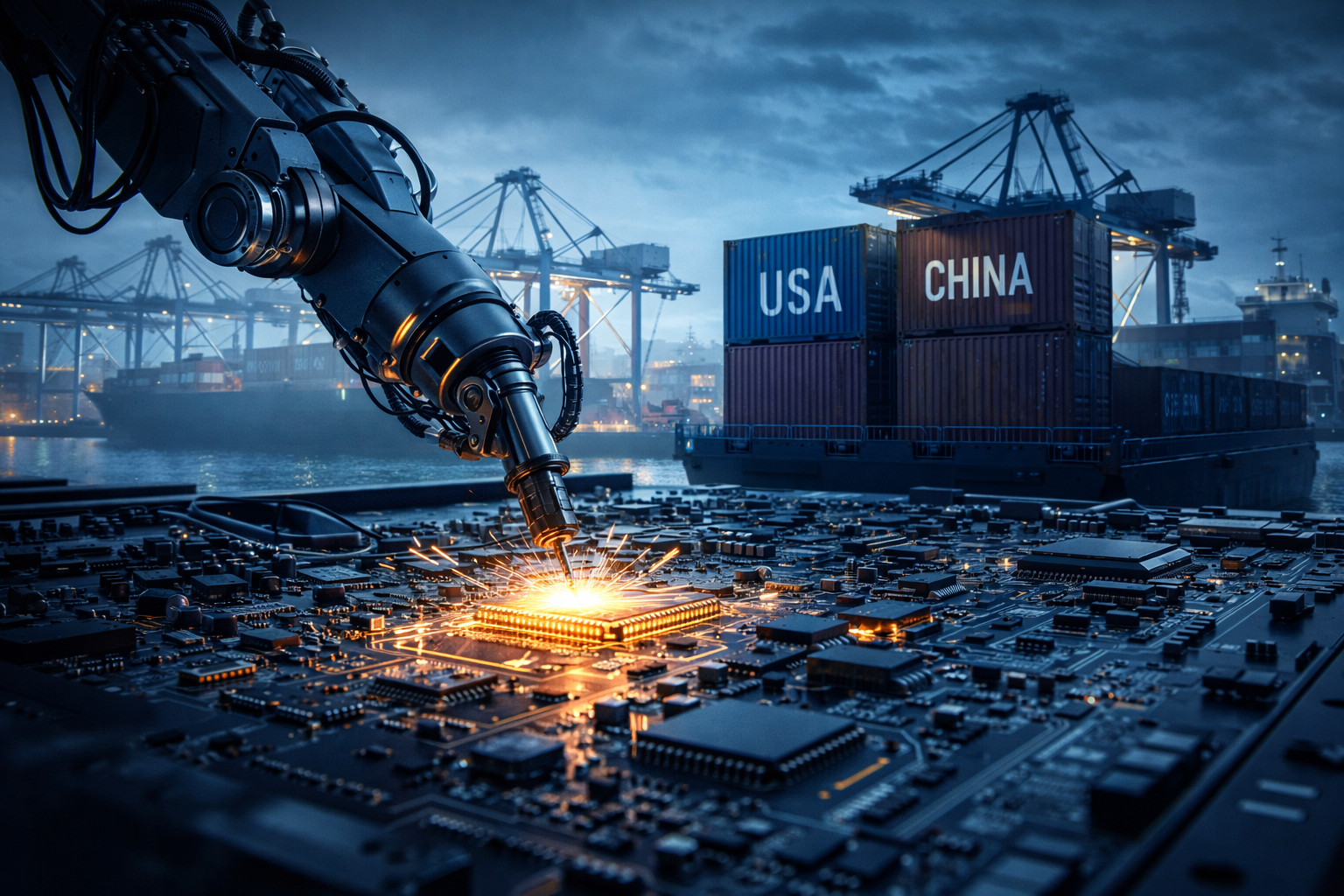
Asia Markets Shaken as China Urges End to ‘Unilateral’ Measures Following Trump’s Tariff Pivot
BEIJING, China — The global trade landscape entered a volatile new chapter on Monday, February 23, 2026, as China’s Ministry of Commerce issued a sharp condemnation of the United States‘ latest trade maneuvers. In an official statement released early Monday, Beijing urged Washington to lift “unilateral tariff measures,” warning that the ongoing confrontation between the world’s two largest economies is “detrimental to all parties.” The friction follows a weekend of high-stakes legal and political drama in the U.S., where President Donald Trump pivoted to a 15% global tariff rate after the Supreme Court struck down his previous emergency levies as illegal.
The Beijing Rebuttal: Breaching International Norms
China’s response was characterized by a mix of diplomatic caution and firm resistance. A spokesperson for the Ministry of Commerce stated that the unilateral tariffs imposed by the U.S. breach both international trade norms and American domestic legislation. According to early reports, the Chinese government is currently conducting a “comprehensive review” of the U.S. Supreme Court ruling, which invalidated the previous IEEPA-based tariffs but paved the way for the administration to invoke Section 122 of the Trade Act of 1974.
The Chinese ministry cautioned that “fighting is harmful” and reiterated its call for collaboration rather than confrontation. However, analysts in Beijing suggest that China is already preparing “proportional countermeasures” should the 15% surcharge take effect as scheduled on Tuesday. This latest development is poised to disrupt the tentative stability that had characterized Sino-American trade in early 2026, forcing multinational corporations to once again re-evaluate their trans-Pacific supply chains.
India and the ‘Winner’s Curse’ of Market Volatility
In Mumbai, the reaction was more nuanced. While Indian exporters are technically poised to benefit from the Supreme Court’s striking down of the previous, more punitive tariffs, the sudden shift to a 15% global rate has created a “relief rally” that many fear will be short-lived. The Sensex and Nifty indices opened on a firm note on Monday, tracking a broader rally in Asian markets, but market strategists warned that the gain is based on sentiment rather than fundamentals.
“The Trump tariff tale has become murkier,” noted V.K. Vijayakumar, Chief Investment Strategist at Geojit Investments. He highlighted that while the initial court victory for trade partners is a positive, the new 15% surcharge under Section 122 is almost certain to be challenged in U.S. courts. Based on preliminary data, India has already delayed the visit of its trade negotiating team to Washington, opting to wait until the legal “economic fog” clears. For India, the primary concern remains the unpredictability of a “movable feast” of trade policy that could pivot at any moment.
The ASEAN Perspective: Regional Stability at Risk
Across Southeast Asia, the sentiment is one of wary observation. At the ASEAN Headquarters in Jakarta, the focus on Monday remained on regional integration, even as the global trade war loomed large. Secretary-General Dr. Kao Kim Hourn received the Letter of Credence from the new Ambassador of Georgia to ASEAN, emphasizing the region’s commitment to expanding bilateral linkages in the digital economy and tourism.
However, the “winners-and-losers” effect of the shifting U.S. policy is palpable. Hong Kong’s Hang Seng index surged 2.2% on Monday, leading regional gains as traders bet on a temporary reprieve for Chinese exports. Conversely, markets in Japan and mainland China remained closed for holidays, delaying the full impact of the news on those domestic economies. Economists suggest that for smaller ASEAN nations, the 15% global tariff could be particularly damaging, as they lack the domestic market scale to absorb the increased costs of exporting to the United States.
Taiwan: AI Boom vs. Geopolitical Shadow
In Taipei, the trade drama coincides with a period of unprecedented growth driven by the AI revolution. Real estate and stock markets in Taiwan have soared, with the Taiex jumping 1.4% on Monday. Despite the “shadow” of persistent threats from Beijing and the uncertainty of U.S. trade barriers, Taiwan’s role in the global semiconductor supply chain appears to be a protective shield.
Investors in Taipei are betting that high-tech exports, particularly those related to Nvidia and other AI pioneers, will be insulated from the worst of the tariff fallout due to their essential nature in the global economy. Yet, the escalating tensions between Beijing and Washington over “unilateral measures” remind Taiwanese officials that their economic prosperity is inextricably linked to the stability of the broader Pacific trade architecture.
A Global Legal Battle on the Horizon
As the February 24 deadline for the new 15% tariff approaches, legal scholars in Asia are looking toward the U.S. court system for the next move. Many experts argue that Section 122 of the 1974 Trade Act is intended to address “serious balance of payments crises”—a condition they contend the U.S. does not currently meet. If the new tariffs are also found to be an overreach of executive power, the global economy could face a period of unprecedented litigation and chaotic refund claims.
For now, Asia remains in a state of high alert. From the trading floors of Hong Kong to the ministry offices in Beijing, the message is clear: the era of predictable global commerce is under siege, and the cost of this “unilateral” confrontation will be measured in trillions of dollars of disrupted growth.








Leave a comment