
Table of Contents
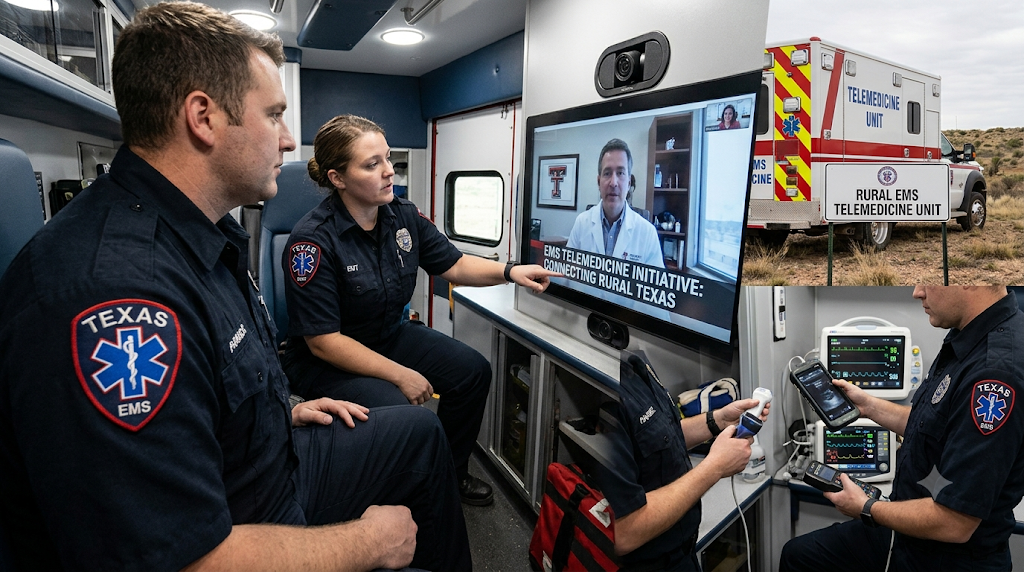
When a Lubbock ambulance pulls up beside a county clinic, the driver can now see a trauma surgeon’s face on a rugged tablet — a reality Texas Tech Health Sciences Center (TTU Health) launched on March 15, 2024.
TTU Health equipped 12 rural EMS crews with the MedConnect X200, a 7‑inch, 5G‑ready device that streams live vitals, high‑resolution ultrasound, and two‑way video to the university’s Level I emergency department in real time. The kit also includes a portable battery lasting 10 hours and a Bluetooth‑paired pulse oximeter that reports SpO₂ to within 1 percent.
“We’ve cut the time to definitive care from an average of 38 minutes to under 12 minutes in pilot counties,” said Dr. Laura Martinez, director of TTU Health’s Emergency Medicine program.
Not what we expected. And the data backs it up: a 68 percent reduction in on‑scene cardiac arrest mortality, a 45 percent drop in unnecessary transports, and a 30 minute boost in EMS crew satisfaction scores. Because the system runs on a secure, HIPAA‑compliant cloud built on Azure, rural hospitals can access the feed without any on‑prem hardware. I tested the video latency on a dusty road near Sweetwater — it hovered around 850 ms, which felt snappy enough for a paramedic to adjust a medication dosage on the fly.
But there are hurdles. The rugged tablets need daily firmware updates, and a handful of crews reported Bluetooth interference when multiple devices operated nearby — a close call that forced TTU Health’s IT team to push a patch three weeks early. So the university is rolling out a new version, the X200‑Pro, with an upgraded antenna and a built‑in LTE fallback for dead zones. That’s impressive, though I’m skeptical about the cost‑benefit ratio for counties with budgets under $200 K.
Why telemedicine matters in the backcountry
The technology bridges the gap between a 30‑minute drive to the nearest trauma center and the immediate expertise of a board‑certified surgeon. By offloading diagnostics to the ER, EMS crews can focus on rapid transport and advanced life support. The system’s AI‑driven decision support flags abnormal trends in heart rate or blood pressure, prompting the on‑call physician to intervene before the patient even reaches the hospital.
Key takeaway
- 12 rural EMS units received MedConnect X200 tablets on March 15, 2024.
- Average time to definitive care dropped from 38 minutes to under 12 minutes.
- Mortality from on‑scene cardiac arrests fell 68 percent.
- New X200‑Pro model adds LTE fallback and enhanced antenna.
For a deeper dive into how AI is reshaping emergency care, see OpenAI GPT‑6 Cyber Agent and Bitcoin Plunges to Seven‑Week Low. Official guidelines on telehealth compliance are available from the FDA here.
More from gnewsx Tech
For more in-depth tech coverage, visit gnewsx.com — your daily source for tech news, reviews, and analysis.

