

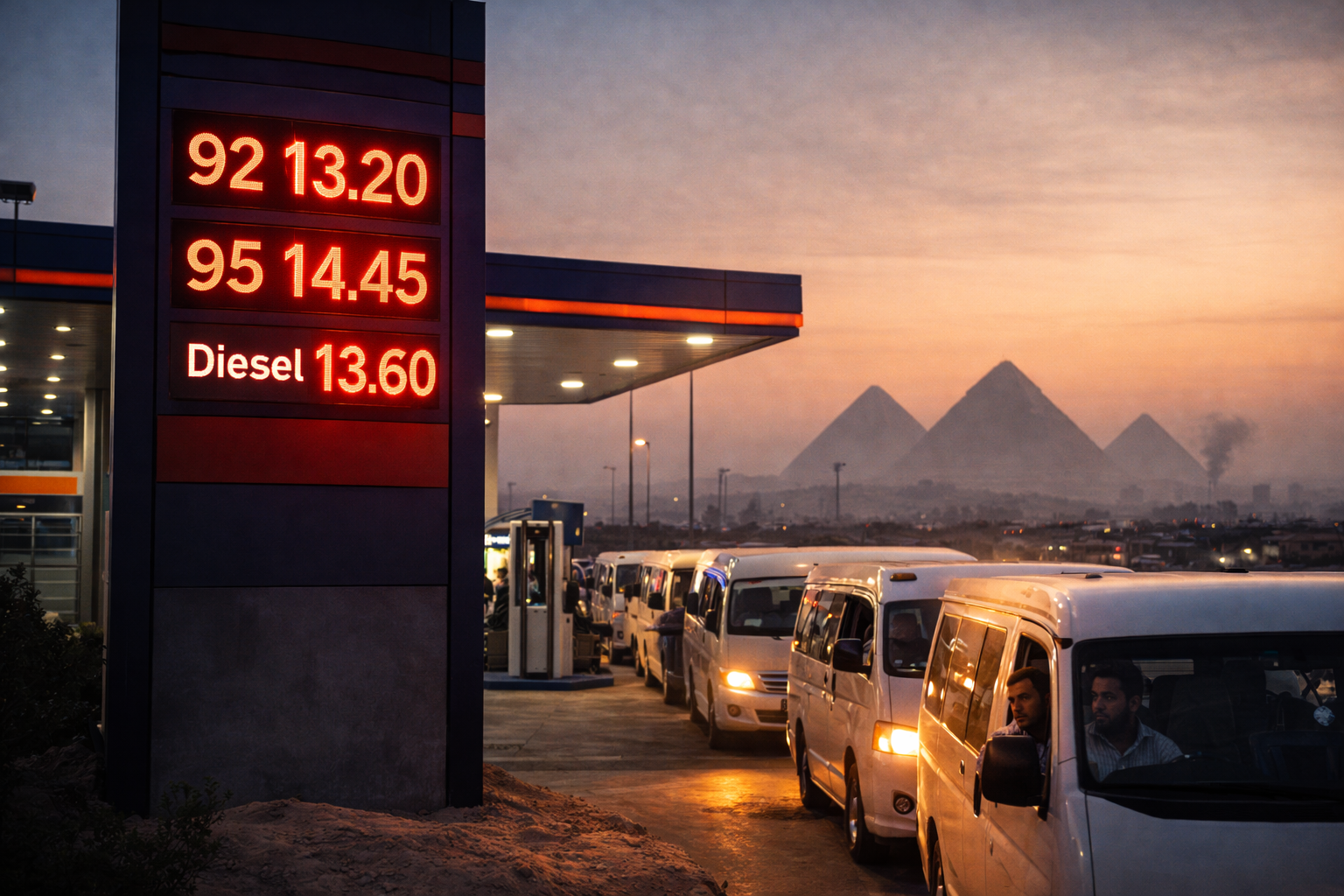

Economic Shock: Egypt Implements Radical Fuel Price Increases Amid Middle East Instability
CAIRO, Egypt — The Egyptian government announced a sweeping series of fuel price hikes on Tuesday morning, March 10, 2026, marking one of the most significant adjustments to domestic energy costs in recent history. The Ministry of Petroleum and Mineral Resources confirmed that prices for gasoline, diesel, and compressed natural gas (CNG) for vehicles have increased by as much as 30%. In an official statement, authorities cited “exceptional” global energy pressures and geopolitical shocks stemming from the ongoing conflict between the US-Israel axis and Iran as the primary drivers behind the decision. The move is projected to heighten inflationary pressures on an already import-reliant economy, which had just begun to show signs of stabilizing before the regional “pre-emptive” strikes on February 28.
The New Price Reality
The overnight increases, which took effect at 12:00 AM on Tuesday, have fundamentally altered the cost of living for millions of Egyptians. Preliminary data from the Ministry reveals the following adjustments:
- Gasoline 95: Rose by 25%, nearing record highs per liter.
- Diesel: A critical fuel for transport and agriculture, saw a 30% surge, a move poised to cause a “knock-on” effect on food and commodity prices.
- CNG for Vehicles: Adjusted upward to reflect the rising cost of natural gas in the global market.
The government maintains that these measures are “responsible” and necessary to safeguard national energy security. By reducing the subsidy burden, officials hope to navigate the “geopolitical debris” currently clogging traditional oil supply and shipping routes in the Red Sea and the Gulf.
Inflationary Fears Amid Regional War
The timing of the fuel hike is particularly challenging as it coincides with the holy month of Ramadan and a period of heightened regional volatility. Bloomberg reports indicate that Egyptian inflation had already begun to quicken in February, a trend now poised to worsen. Analysts suggest that the “war-ready” pivot of global energy markets has created a bottleneck for Egypt, which relies heavily on a stable maritime corridor for its energy imports.
“The situation is precarious,” noted one Cairo-based economist. “With fuel prices jumping 30%, the cost of transporting goods will skyrocket, and those costs will be passed directly to the consumer during a month of peak demand.” The Ministry of Industry has reportedly held emergency meetings with manufacturers to discuss the impact of natural gas price hikes on production sectors like ceramics and porcelain, which are already struggling with liquidity issues.
A Fragile Economic Balance
The current crisis threatens to unravel the progress made following the $57 billion bailout Egypt received in 2024. While the government remains committed to its structural reform agenda, the external shocks of the March 2026 regional war have introduced a degree of “unprecedented” uncertainty. To mitigate the impact on the most vulnerable, the Ministry of Social Solidarity is projected to expand cash-transfer programs, though critics argue these measures may not be enough to offset the 30% jump in transport costs.
Furthermore, Egypt has adjusted its entry policies for international tourists, raising the visa-on-arrival fee from $25 to $30. While a seemingly minor change, it reflects a broader strategy to bolster foreign currency reserves as the nation navigates a complex web of economic and security challenges.
The Road Ahead
As the big wave of conflict in the Middle East looms, as warned by President Trump earlier today, Egypt finds itself in a race against time to insulate its domestic market from global shocks. The coming weeks will be a critical test of the administration’s ability to manage public discontent while maintaining fiscal discipline. For now, Egyptians at the pump are left grappling with a new reality where the cost of a full tank is a direct reflection of a region at war.














Leave a comment