


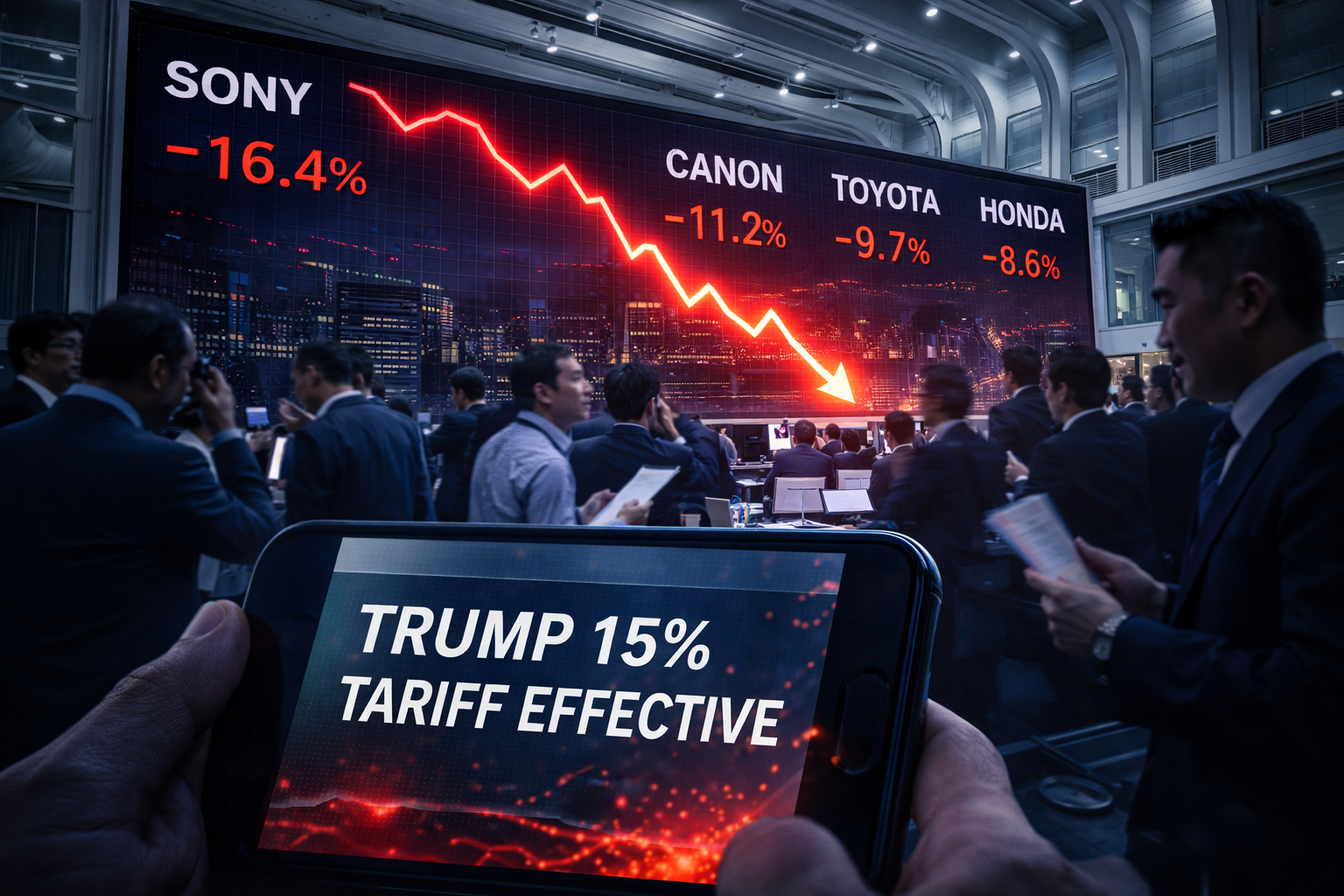
Tokyo Scrambles for Contingency Budgets as Trump’s 15% Surcharge Sows Global Economic Uncertainty
TOKYO, Japan — A thick “economic fog” has descended upon the world’s major financial hubs this Tuesday, March 3, 2026, as Japan and its G7 partners scramble to respond to the sudden imposition of a 15% global tariff by the United States. Following a weekend of legal upheaval in Washington, where President Donald Trump successfully pivoted to the Trade Act of 1974 after a Supreme Court defeat, the Japanese government and the European Union have issued separate but equally somber warnings. Japanese Prime Minister Sanae Takaichi signaled today that the government may be forced to compile a supplementary budget if the combined pressure of trade friction and the escalating Middle East conflict continues to weigh on the domestic economy.
Japan’s Fiscal Shield: Takaichi Weighs Extra Budget
The announcement by Prime Minister Takaichi at a House of Representatives Budget Committee meeting marks a significant shift in Tokyo’s fiscal outlook. While Japan had been focused on a “vibrant recovery” following its record-breaking performance at the Milano Cortina Winter Olympics, the dual threat of a 15% US import surcharge and the “pre-emptive” US-Israel strikes on Iran has forced a return to emergency planning.
“The possibility of an extra budget for fiscal 2026 is not zero if the fighting in the Middle East is prolonged and trade barriers remain in place,” Takaichi stated. Preliminary data suggests that while electricity and gas bills have not yet seen an immediate spike, the government is poised to decide whether to extend utility subsidies beyond March. The Prime Minister’s “frank” upcoming summit with President Trump on March 19 is now being viewed as a make-or-break moment for the US-Japan trade alliance.
The European Union: “Unilateral Measures are Unacceptable”
In Brussels, the reaction to the new 15% tariff has been one of coordinated resistance. The European Union issued a formal statement on Tuesday morning, declaring it will “accept no increase” in U.S. tariffs. EU trade officials are poised to file a formal complaint with the World Trade Organization, arguing that the invocation of Section 122—intended for “balance-of-payments” crises—is a legal overreach.
The UK, meanwhile, is attempting to balance its “special relationship” with the U.S. against the reality of its own trade interests. British Finance Minister Rachel Reeves emphasized the need for “stable and predictable” trade partners, even as the UK and US recently sealed a $42 billion tech pact. The tension lies in whether these bilateral deals can survive a 15% blanket surcharge that treats allies with the same severity as rivals.
Market Volatility and the “150-Day Clock”
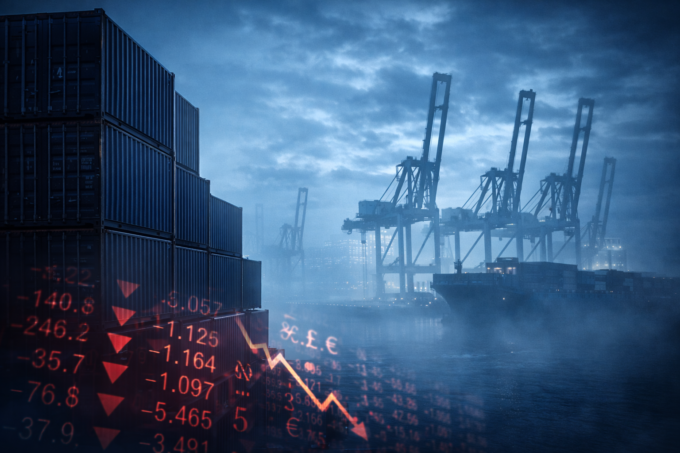
Global markets opened Tuesday with significant volatility. In Australia, the ASX 200 managed a slight rise, tracking a late-week rally on Wall Street, but analysts warn that the “tariff fog” is poised to dampen growth in the second quarter. The 150-day expiration date of the new Section 122 measure has created a high-stakes countdown for global exporters.
According to early reports from logistics firms, cargo ships are currently racing toward U.S. ports in an attempt to clear customs before the next wave of enforcement. The “mobilization risk” for services and construction has reached a critical level. In South Korea, shares of defense giant Hanwha Aerospace surged over 23% as investors bet on increased global defense demand, highlighting the “war-ready” pivot of international capital.
A Turning Point for Global Governance
As the world looks toward the President’s State of the Union address, the consensus among G7 leaders is that the era of traditional multilateralism is under severe strain. Whether the 15% tariff is a permanent shift toward protectionism or a short-term negotiating tactic remains the primary question of 2026. For now, nations like Japan find themselves in a precarious position: forced to choose between loyalty to a primary security ally and the economic survival of their domestic industries.
“We must protect our country by ourselves,” Takaichi remarked today, echoing a sentiment of “strategic autonomy” that is becoming the new global norm. As the 150-day clock ticks, the global trade architecture is poised on a knife-edge, with the cost of this “unilateral” confrontation projected to reach trillions of dollars in disrupted growth.








Leave a comment