Market Panic in Mumbai: IDFC First Bank Shares Hit Lower Circuit Following Rs 590-Crore Employee Fraud
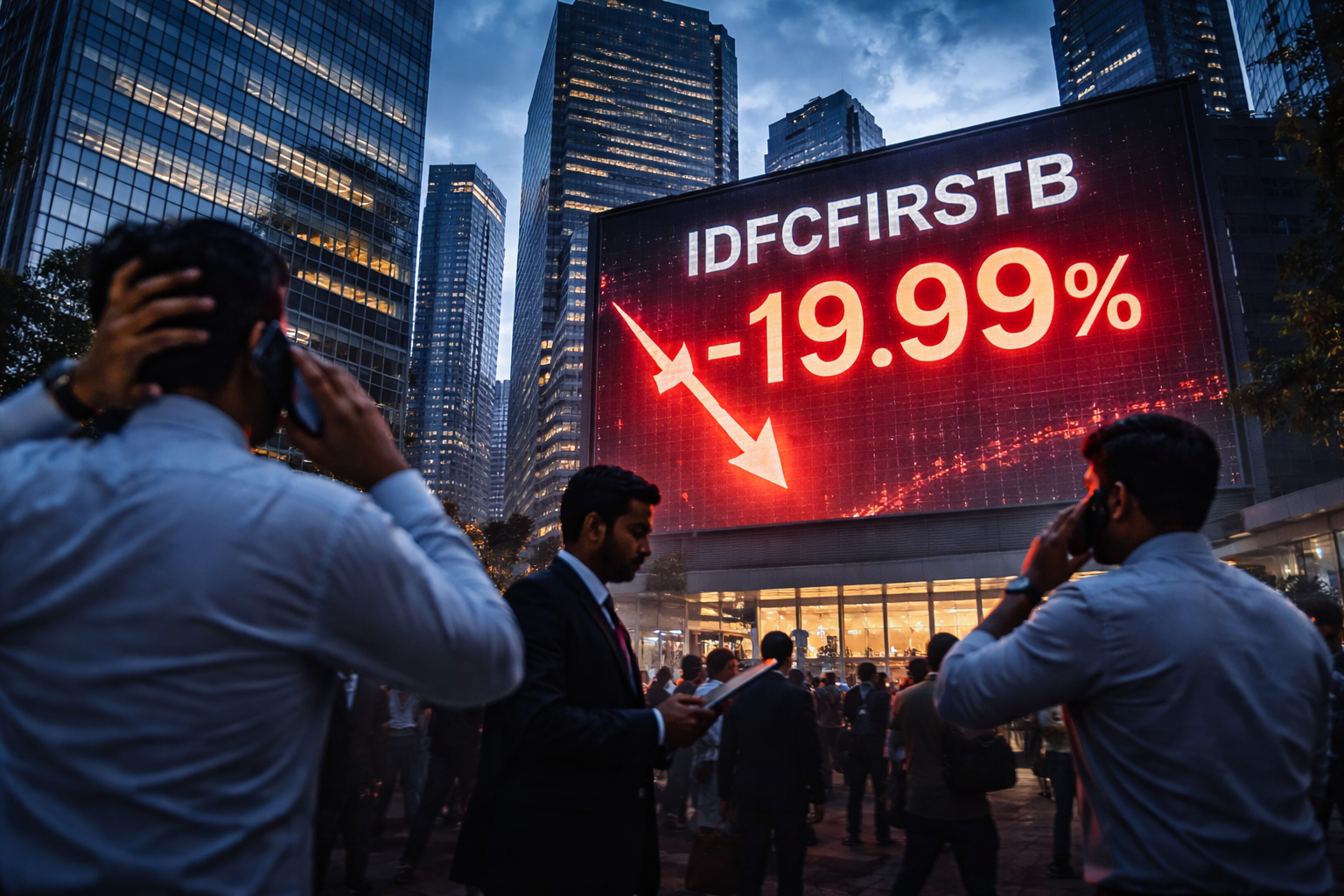
MUMBAI, India — The Indian financial sector was rattled on Monday, February 23, 2026, as shares of IDFC First Bank plummeted by the maximum daily limit of 20%, following the disclosure of a massive internal fraud. The private sector lender revealed in a late-night regulatory filing that several employees, acting in collusion with external parties, had orchestrated a fraudulent scheme involving accounts held by the Haryana government, resulting in a loss of approximately Rs 590 crore. The fallout was immediate and severe, as the Haryana state government moved to de-empanel the bank alongside AU Small Finance Bank, which was also implicated in the alleged mismanagement.
The Anatomy of the Rs 590-Crore Deception
The scandal, which has been described by banking analysts as a “significant failure of internal controls,” reportedly involved the fraudulent opening and manipulation of accounts designated for state government funds. Preliminary data suggests that the perpetrators exploited vulnerabilities in the bank’s digital onboarding and verification systems to divert public money into unauthorized private accounts over a period of several months. According to early reports from the bank’s internal investigation, the fraud was only detected after a routine audit by the Haryana state treasury flagged inconsistencies in interest disbursements.
The disclosure sent a wave of selling through the National Stock Exchange (NSE) and Bombay Stock Exchange (BSE). IDFC First Bank’s stock nosedived 19.99% to hit the lower circuit at Rs 66.85, effectively freezing trade for the remainder of the session. Market sentiment was further dampened by news that AU Small Finance Bank also faced a 7.62% decline after being barred from undertaking any further government business in the state of Haryana.
Regulatory Crackdown and State Sanctions
The Haryana government’s decision to de-empanel both banks is poised to have long-term structural consequences for their public-sector business portfolios. A spokesperson for the state finance department noted that “zero tolerance” would be shown toward financial institutions that fail to safeguard public trusts. Based on exit polls of institutional investors, there is a growing fear that other state governments may follow suit, potentially leading to a massive outflow of low-cost deposits that these banks have spent years cultivating.
In response to the crisis, the Reserve Bank of India (RBI) is projected to launch a special forensic audit into the banks’ operations. While IDFC First Bank’s management has assured stakeholders that they have “taken swift action” against the involved employees and filed formal police complaints, the market remains skeptical. Analysts suggest that the fraud reflects a deeper cultural issue within the fast-growing private banking sector, where aggressive targets for account acquisition may have led to a compromising of compliance standards.
Political Recriminations and a “War” in the South
While the banking sector struggled, the Indian political landscape saw its own set of dramatic developments. In Tamil Nadu, the actor-turned-politician Vijay, founder of the Tamilaga Vettri Kazhagam (TVK) party, launched a scathing attack on Chief Minister M.K. Stalin. Speaking at a massive rally in Vellore on Monday, Vijay declared that the 2026 Assembly election is a “war between the DMK and TVK,” labeling the ruling party as an “evil force” fueled by corruption.
Vijay challenged the Chief Minister to declare his personal assets, asserting that the state’s people are tired of “inept” governance. This political polarization is poised to redefine the electoral map of South India, as Vijay positions himself as the “pure force” against the established political dynasty of the Stalin family. Preliminary reports from the ground suggest that the youth vote is gravitating toward the TVK, creating what many are calling a “surprising election” cycle.
A Nation at a Crossroads of Trust
From the trading floors of Mumbai to the political stages of Tamil Nadu, Monday has been a day of reckoning for Indian institutions. The IDFC First Bank fraud is poised to serve as a catalyst for stricter digital banking regulations, while the political upheaval in the south suggests a changing of the guard in one of India’s most influential states.
As the RBI prepares its next move, the primary concern for the average Indian remains the safety of their savings and the integrity of the democratic process. Whether the banking sector can restore trust through transparency, and whether the political “war” will lead to genuine reform, remains to be seen. For now, India remains in a state of high alert, navigating a complex web of financial scandal and political transformation.