Tokyo and London Signal Deep Concern as President Trump’s 15% Surcharge Sows Global Economic Uncertainty
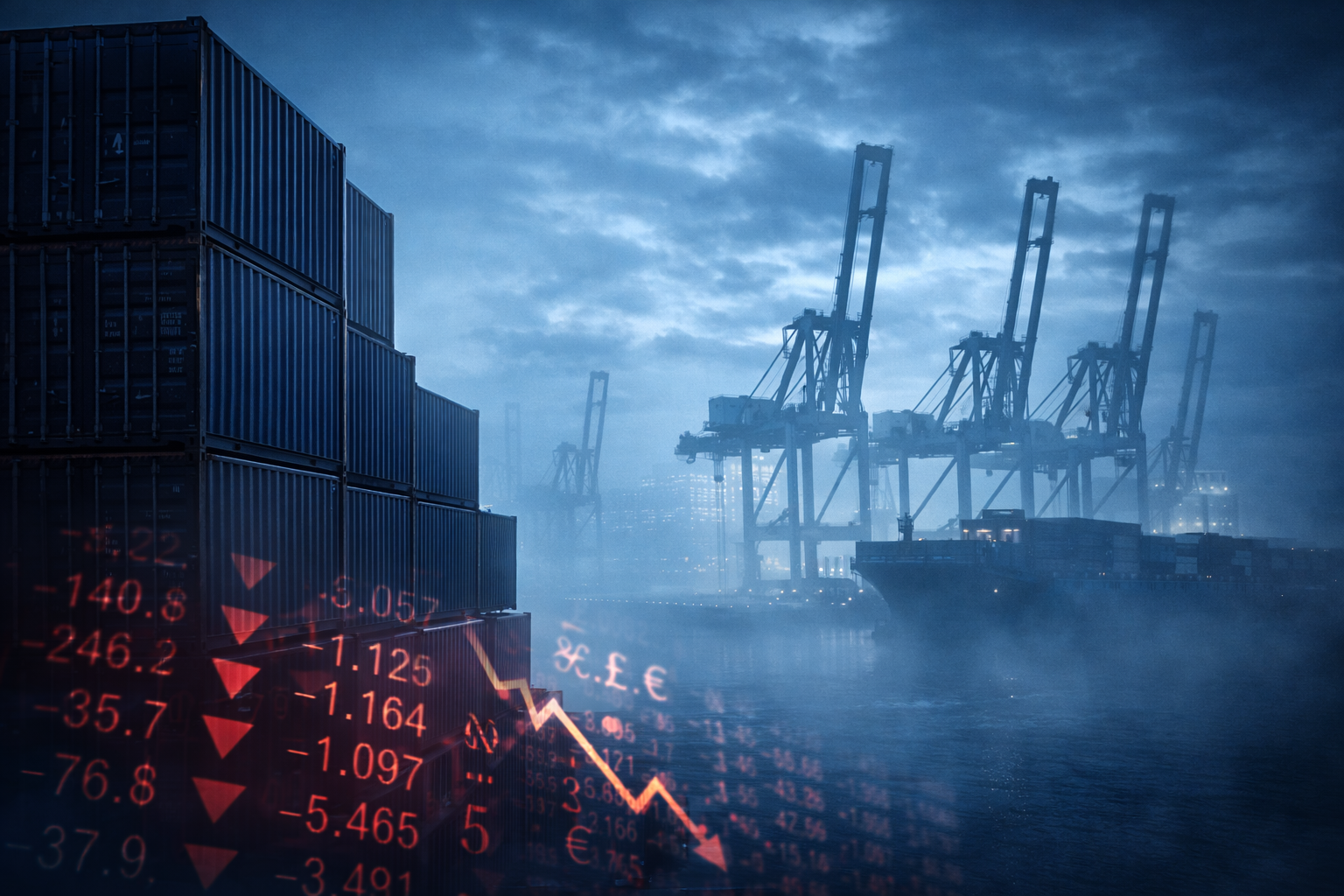
TOKYO, Japan — A thick “economic fog” has descended upon the world’s major financial hubs this Monday, February 23, 2026, as Japan and its G7 partners scramble to respond to the sudden imposition of a 15% global tariff by the United States. Following a weekend of legal upheaval in Washington, where President Donald Trump successfully pivoted to the Trade Act of 1974 after a Supreme Court defeat, the Japanese government and the European Union have issued separate but equally somber warnings. The move, characterized by analysts as a “Plan B” strategy, is poised to disrupt billions in trans-Pacific and trans-Atlantic trade, threatening a fragile global recovery that has only recently begun to stabilize.
Japan’s National Day Marred by Trade Tensions
The announcement coincided with Japan’s National Day and the birthday of His Majesty the Emperor, a day usually reserved for celebration and diplomatic pleasantries. While President Trump issued a statement praising a “new golden age” of U.S.-Japan relations, the underlying tone in Tokyo was one of wary pragmatism. Prime Minister Sanae Takaichi, recently re-elected on a platform of economic resilience, has reportedly ordered the Ministry of Economy, Trade and Industry (METI) to conduct an immediate impact assessment for Japanese automotive and technology exports.
Preliminary data suggests that the 15% surcharge could be particularly damaging to Japan’s high-tech manufacturing sector, which is already grappling with fluctuating domestic tourism numbers and rising energy costs. Despite the diplomatic “shoulder-to-shoulder” rhetoric from Washington, Japanese officials expressed concern that the across-the-board nature of the new tariffs fails to distinguish between strategic allies and economic competitors.
The European Union: “No Increase in Tariffs is Acceptable”
In Brussels and London, the reaction has been significantly more vocal. The European Union issued a formal statement on Monday morning, declaring it will “accept no increase” in U.S. tariffs. EU trade officials are poised to file a formal complaint with the World Trade Organization, arguing that the invocation of a “payments crisis” to justify the 150-day tariff window is a legal fiction. Most international economists remain skeptical of the administration’s claim that the U.S. is facing a genuine balance-of-payments emergency, with experts noting that the nation continues to meet its obligations to international investors.
The UK, meanwhile, is attempting to balance its “special relationship” with the U.S. against the reality of its own trade interests. British Finance Minister Rachel Reeves, speaking at a mining summit in South Africa, emphasized the need for “stable and predictable” trade partners. The UK is projected to seek specific exemptions for its critical minerals and aerospace exports, although the administration has so far shown little inclination toward granting carve-outs under the new Section 122 mandate.
Market Volatility and the “150-Day Clock”
Global markets opened Monday with significant volatility, as investors attempted to price in the “Tuesday Deadline”—the moment the 15% surcharge becomes law. In Australia, the ASX 200 managed a slight rise, tracking a late-week rally on Wall Street, but analysts warn that the “tariff fog” is poised to dampen growth in the second quarter of 2026. The 150-day expiration date of the new measure has created a high-stakes countdown for both global exporters and the U.S. Congress.
According to early reports from logistics firms, cargo ships are currently racing toward U.S. ports in an attempt to clear customs before the 12:01 a.m. Tuesday effective date. The “mobilization risk” for services and construction—industries already reeling from a 16.5% spike in copper prices—has reached a critical level. In Australia alone, construction insolvencies are nearing record highs, and the additional cost of imported materials is poised to be a “fundamental threat” to project viability.
A Turning Point for Global Governance
As the world looks toward the President’s State of the Union address next week, the consensus among G7 leaders is that the era of traditional multilateralism is under severe strain. Whether the 15% tariff is a permanent shift toward protectionism or a short-term negotiating tactic remains the primary question of 2026. For now, nations like Japan and the UK find themselves in a precarious position: forced to choose between loyalty to a primary security ally and the economic survival of their domestic industries.
The “economic fog” of February 2026 is unlikely to lift soon. With legal challenges pending and the 150-day clock ticking, the global trade architecture is poised on a knife-edge. As one Tokyo-based analyst put it, “We are no longer playing by the old rules; we are simply trying to survive the new ones.”