


Tragedy in Dhading: Rescue Operations Intensify After Fatal Passenger Bus Crash in Central Nepal
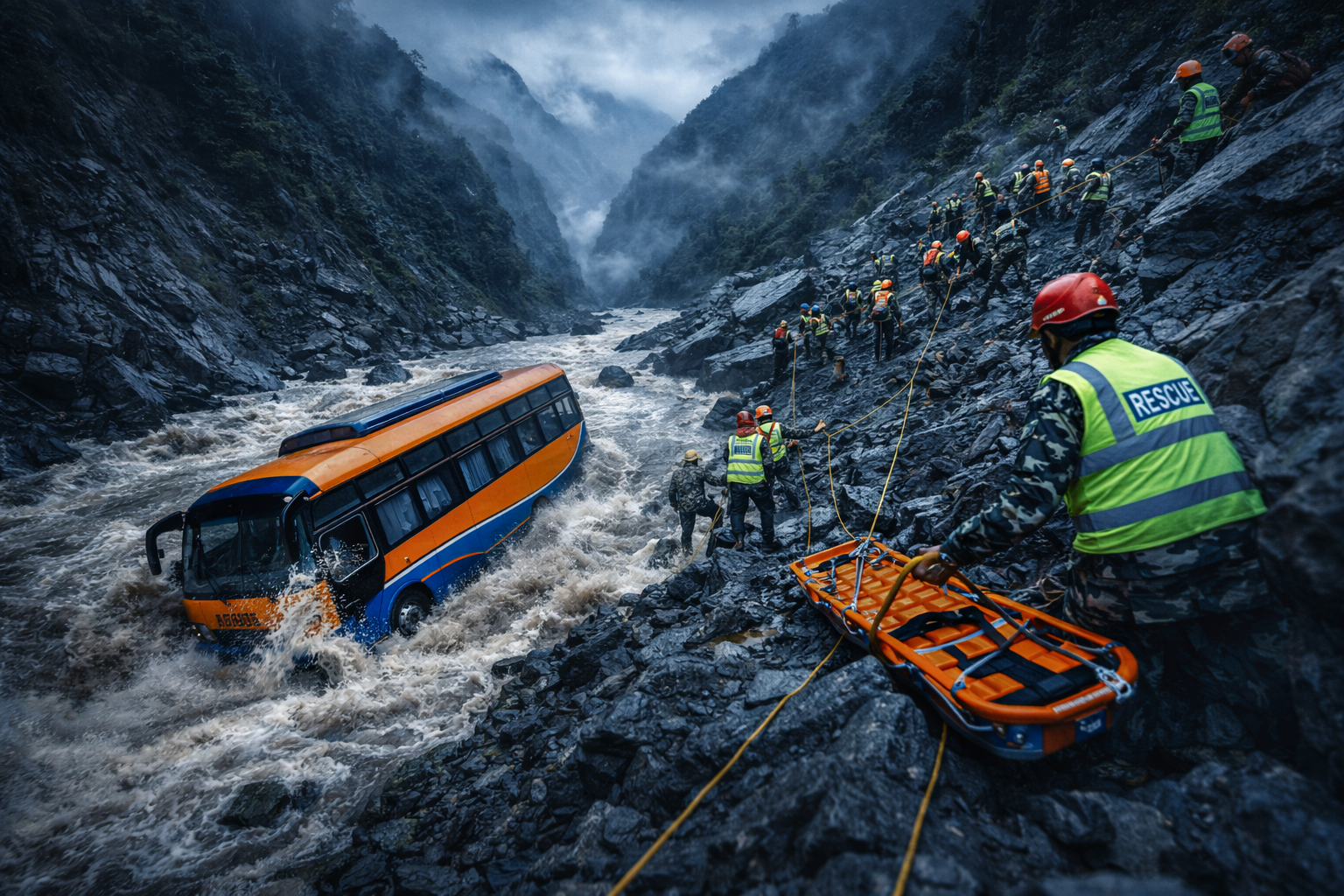
KATHMANDU, Nepal — At least 18 people have been confirmed dead and dozens more remain critically injured after a passenger bus veered off a winding mountain highway and plunged into the Trishuli River in the Dhading district on Monday, February 23, 2026. The vehicle, which was reportedly carrying passengers far beyond its legal capacity, was en route from the capital, Kathmandu, to the western district of Myagdi when the driver lost control on a treacherous stretch of the Prithvi Highway. Local authorities have described the scene as “devastating,” with rescue teams from the Nepal Army and Armed Police Force struggling against steep terrain and fast-flowing waters to recover victims.
A Fatal Descent in Central Nepal
The accident occurred early Monday morning near the Gajuri area of Dhading, a region notorious for its difficult road conditions and sharp curves. Preliminary data suggests that the bus tumbled nearly 100 meters down a vertical cliff before partially submerging in the river. Witnesses at the scene reported hearing a “thunderous crash” followed by cries for help from survivors trapped within the wreckage.
By Monday afternoon, 18 bodies had been recovered from the site, including those of several women and children. Emergency medical teams have transported over 25 survivors to local hospitals in Dhading and Kathmandu, with several individuals listed in critical condition. Hospital officials warn that the death toll is poised to rise as search and rescue divers continue to scour the submerged sections of the bus for those still missing.
Overloading and Infrastructure: The Hard Truths
While the official investigation is ongoing, early reports from survivors and local traffic police point toward a combination of mechanical failure and severe overloading. Eyewitnesses claimed that several passengers were traveling on the roof of the bus, a dangerous but common practice in rural Nepal despite government bans. The driver, who is among the injured and currently in police custody, reportedly cited a “steering malfunction” just seconds before the vehicle left the roadway.
Nepal’s Ministry of Physical Infrastructure and Transport has come under immediate fire following the tragedy. Critics argue that the Prithvi Highway, the nation’s most vital commercial artery, remains in a state of “perpetual repair” with inadequate safety barriers and poor lighting. This incident is projected to reignite a fierce national debate regarding road safety regulations and the enforcement of passenger limits on long-haul routes.
Rescue Efforts Hampered by Terrain
The rescue operation has faced significant hurdles due to the geography of the Dhading district. The Trishuli River is currently at a high flow rate following recent mountain runoff, making it difficult for divers to operate safely. Army personnel have utilized heavy-duty cranes and ropes to stabilize the wreckage, fearing that the bus could be swept further downstream if not secured.
Nepal’s Prime Minister issued a statement Monday afternoon expressing “deep sorrow” over the loss of life and directing the local administration to provide free medical treatment to all survivors. The government has also announced a preliminary compensation package for the families of the deceased, though social media activists have dismissed the move as a “reactive gesture” that fails to address the systemic corruption in the transport sector.
A Recurring National Crisis
This latest disaster highlights a grim reality for the Himalayan nation: road accidents in Nepal claim more lives annually than natural disasters, excluding the 2015 earthquake. According to traffic safety experts, the combination of aged vehicle fleets, lack of driver training, and poorly maintained mountain roads creates a “perfect storm” for high-fatality crashes.
As the families of the victims gather at the Tribhuvan University Teaching Hospital in Kathmandu to identify their loved ones, the nation is once again left questioning why such preventable tragedies continue to occur. The Dhading crash is poised to be recorded as one of the deadliest transport incidents of 2026, serving as a somber reminder that for many in Nepal, a simple bus journey remains a high-stakes gamble with fate.















Leave a comment