


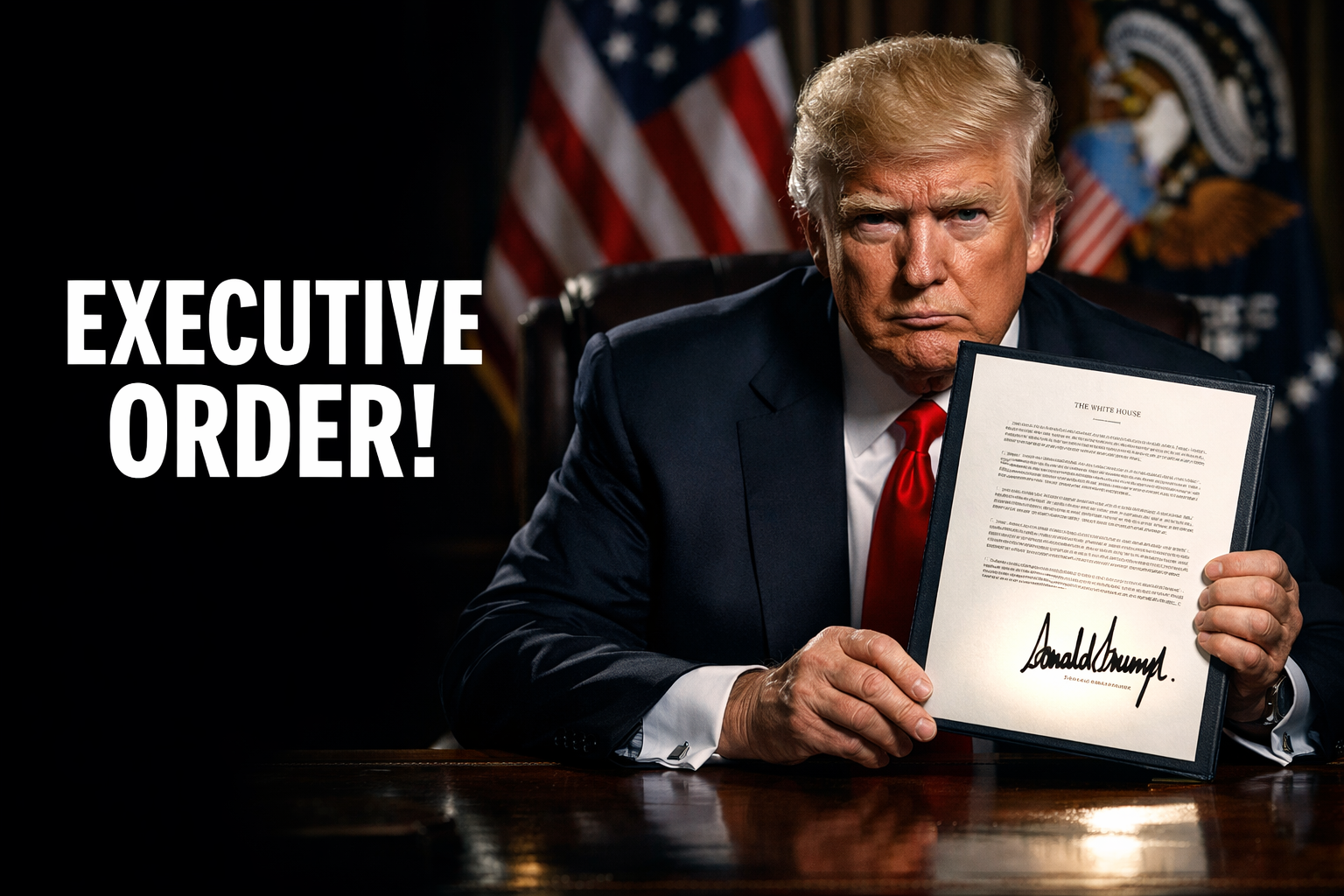
President Trump Invokes 1974 Trade Act to Impose 15% Global Tariff After Supreme Court Defeat
WASHINGTON, D.C. — In a dramatic escalation of executive authority that has sent shockwaves through global markets, President Donald J. Trump officially signed a proclamation on Saturday, February 21, 2026, imposing a mandatory 15% temporary import surcharge on all goods entering the United States. This aggressive move comes less than 24 hours after the U.S. Supreme Court delivered a stinging rebuke to the administration, ruling 6-3 that the President’s previous attempt to leverage emergency powers for broad tariffs was unconstitutional. By pivoting to the Trade Act of 1974, Trump is poised to test the limits of presidential trade powers in a move that analysts suggest could redefine American commerce for the remainder of the decade.
The Section 122 Gambit: A 150-Day Economic Clock
The new tariff, set at 15% ad valorem, is scheduled to take effect at 12:01 a.m. on Tuesday, February 24, 2026. Unlike the previously struck-down measures which relied on the International Emergency Economic Powers Act (IEEPA), this latest directive invokes Section 122 of the Trade Act of 1974. This specific provision grants the President the authority to deal with “large and serious” balance-of-payments deficits by imposing temporary surcharges for a period not to exceed 150 days.
According to early reports from the Department of Commerce, this “Plan B” strategy is designed to bypass the immediate requirement for Congressional approval while the administration seeks a more permanent legislative fix. However, the clock is ticking; if Congress does not act to extend the measure within the five-month window, the tariffs will legally expire. White House aides have characterized the move as an essential protection for the American worker, while critics argue it is a desperate attempt to circumvent the judicial branch.
Global Market Reaction and Diplomatic Fallout
The immediate global response to the 15% surcharge has been one of high-velocity volatility. In India, the Ministry of Commerce announced Saturday that it is “closely studying” the implications, noting that Indian goods previously faced an 18% rate under the now-defunct framework. While 15% is technically lower for some partners, the uniform application of the tax across all nations is poised to disrupt complex supply chains that rely on predictable trade barriers.
In Seoul, South Korean trade officials issued a statement suggesting their bilateral trade deals remain intact but warned of “follow-up measures” if the U.S. implementation deviates from established treaties. The European Union is also projected to file an immediate challenge with the World Trade Organization (WTO), although the administration has historically dismissed WTO rulings as non-binding on American sovereignty. Based on preliminary data from shipping giants, the “Tuesday Deadline” has already triggered a mad scramble at international ports, with exporters attempting to clear customs before the new levies are applied.
Constitutional Crisis: Trump vs. The “Fools and Lapdogs”
The President did not mince words regarding the Supreme Court justices who ruled against him. In a series of social media posts on Saturday afternoon, Trump lambasted the majority—which included his own appointees, Justices Neil Gorsuch and Amy Coney Barrett—calling them “fools and lapdogs” who are “an embarrassment to the country.” This personal vitriol marks a new low in the relationship between the executive and judicial branches, with some constitutional scholars warning that the President’s rhetoric is poised to undermine the very foundation of the rule of law.
Writing for the dissent in Friday’s ruling, Justice Brett Kavanaugh argued that the President requires broad latitude to negotiate in the “dangerous arena” of international trade. Trump praised Kavanaugh as a “hero of the Constitution,” signaling that the administration intends to use the dissent as a legal blueprint for future court battles. Legal experts suggest that the use of Section 122 may be more difficult for the courts to overturn in the short term, as it is a specific, time-limited delegation of power from Congress.
Domestic Economic Impact: Inflation vs. Revenue
The 15% surcharge is projected to generate billions in federal revenue, which the administration claims will be used to offset proposed middle-class tax cuts. However, economists warn that the cost will almost certainly be passed on to the American consumer. Retailers are already warning of price hikes on electronics, automobiles, and apparel just as the nation was beginning to see a cooling of post-pandemic inflation.
“This is a high-stakes poker game with the American economy as the pot,” said a senior analyst at a leading Wall Street firm. “By setting a 150-day expiration, the President is forcing Congress’s hand. He is betting that the threat of a sudden economic cliff in five months will compel lawmakers to give him the permanent tariff authority he craves.”
The Road to the State of the Union
This trade firestorm serves as the backdrop for the President’s State of the Union address, scheduled for next week. With the nation divided over the “Tariff War” and the Supreme Court’s intervention, the address is poised to be one of the most contentious in recent history. Trump has already indicated that his speech will focus heavily on “reclaiming American sovereignty” from “unelected judges and globalist bureaucrats.”
As the 12:01 a.m. Tuesday deadline approaches, the eyes of the world remain fixed on Washington. Whether this 150-day gamble will result in a strengthened American manufacturing base or a deep-seated trade recession remains to be seen. For now, the only certainty is that the era of “stable” trade has been replaced by a new, unpredictable frontier of executive-led economic nationalism.










Leave a comment